

Dental Implants in Istanbul
Everything International
Patients Need to Know
If you are researching dental implants Istanbul, you likely know that losing a tooth rarely stays a small problem. Chewing gets harder on one side, the jawbone underneath starts to change shape over months and years, and for a lot of people, the confidence hit is bigger than they expected. Dental implants are the closest thing modern dentistry has to actually replacing a tooth root rather than just covering the gap, which is part of why this city has turned into one of the most searched destinations for this specific procedure.
This guide tries to answer the questions patients actually ask before they book a flight, not the ones that make a clinic’s marketing look good. That’s the same standard we hold ourselves to at Clinic Plus One: talking honestly about who is and isn’t a good candidate, what the techniques really involve, how the procedure unfolds step by step, what recovery looks like, and the risks a responsible clinic should be raising with you before you ever sit in a chair.
One thing worth saying upfront: nothing here replaces an actual clinical exam. Whether you’re a suitable candidate can only be confirmed once a dentist has looked at your oral health, your medical history, and a proper 3D scan.

What Is a Dental Implant?
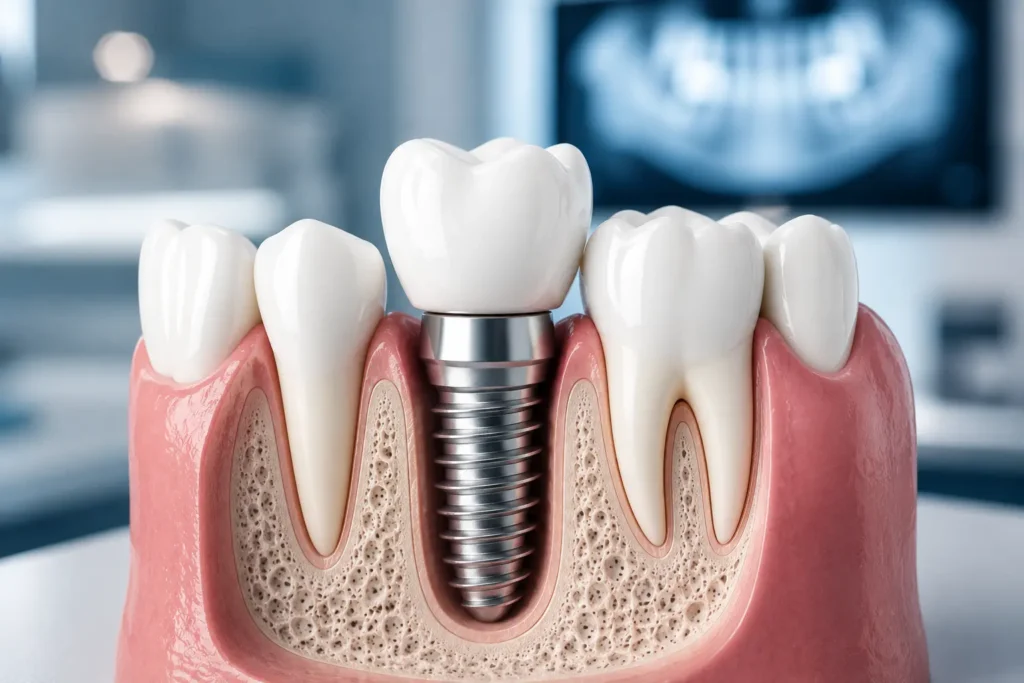
A dental implant is a small titanium or zirconia post that is surgically placed into the
jawbone to act as an artificial tooth root. Once it has fused with the bone — a biological
process called osseointegration — an abutment and a custom-made crown are attached
on top, recreating the appearance and function of a natural tooth.
Unlike a bridge, an implant does not rely on neighbouring teeth for support. Unlike a
removable denture, it does not shift while eating or speaking. This is why implants are widely
regarded by dental associations, including the American Dental Association (ADA) and
the International Team for Implantology (ITI), as a reliable long-term option for suitable
candidates.
Natural Appearance
Strong &
Durable
Improve
Chewing
Preserve
Jawbone
Boost
Confidence
- Modern dental technologies
- Experienced implant specialists
- Established international patient infrastructure
- Luxury accommodation & VIP transfer
- Short waiting times
- Comprehensive patient support
Who Is a Suitable Candidate for Dental Implants?
Most healthy adults with missing teeth are potential candidates, but suitability always depends on individual factors that only a dentist can assess in person. Generally, good candidates:
- Have sufficient jawbone density to support an implant, or are willing to undergo bone grafting if needed
- Have healthy gums free from active, untreated periodontal disease
- Are in stable general health, particularly regarding uncontrolled diabetes or immune conditions
- Do not smoke heavily, as smoking can slow healing and reduce long-term implant success rates
- Are committed to good oral hygiene and regular follow-up care
Age alone is rarely a barrier. Both younger adults (once jaw growth is complete) and patients in their seventies or eighties can often receive implants successfully, provided their bone quality and overall health support it.
A dentist will always confirm candidacy using panoramic X-rays or a 3D CBCT scan, never from photographs or a written questionnaire alone.

Key Benefits of Dental Implants
- Natural appearance and feel. Implants are shaped and coloured to match real teeth, not just approximate them.
- Improved chewing ability compared with removable dentures.
- Long-term jawbone preservation. An implant stimulates bone roughly the way a natural root does, which helps slow the bone loss that follows tooth loss.
- No impact on healthy neighbouring teeth. A traditional bridge requires grinding down the teeth on either side; an implant doesn’t.
- Strong long-term data. Studies published in the International Journal of Oral & Maxillofacial Implants report survival rates generally above 90–95% at the 10-year mark in suitable candidates. Individual results still vary.
- Durability. Implants often last 15–25 years or longer with proper care, though the crown on top may need replacing sooner than the implant itself does.
None of this means a specific lifespan or outcome can be promised for any one patient.Longevity comes down to bone quality, oral hygiene, and general health, and those vary from person to person.

When Is Implant Treatment Recommended?
Dental implants are typically recommended when a patient has:
- A single missing tooth where a bridge would require altering healthy neighbouring teeth
- Multiple missing teeth in one arch or scattered across the mouth
- Full edentulism (no remaining natural teeth) where a fixed, implant-supported solution is preferred over a removable denture
- An ill-fitting or uncomfortable denture that a patient wants to replace with a more stable alternative
When Implants May NOT Be Recommended?
Responsible clinics will also explain when implants are not the right choice, or when treatment needs to be postponed:
- Severe, untreated gum disease — this must be treated first
- Insufficient bone volume without willingness to undergo grafting
- Uncontrolled diabetes or certain autoimmune conditions, which may impair healing
- Active smoking or heavy alcohol use, which can significantly increase failure risk
- Patients undergoing certain bisphosphonate or radiation therapies, who require special evaluation
- Growing patients whose jawbone has not finished developing
In these cases, a dentist may recommend an alternative treatment, a delay, or additional preparatory procedures such as a bone graft or sinus lift.
Types of Dental Implant Treatment
Single Tooth Implant
Replaces one missing tooth without affecting neighbouring teeth. Involves one implant post and one crown.
Multiple Implants / Implant-Supported Bridge
Two or more implants can support a bridge of several crowns, reducing the number of implants needed for multiple missing teeth.
All-on-4 and All-on-6
A full-arch solution in which four or six implants support an entire arch of fixed replacement teeth. This technique is popular among dental tourism patients because it can restore a full arch using four or six strategically placed implants, often using the patient’s remaining bone more efficiently. Treatment planning and healing time still vary by case.
Immediate Load (“Same-Day”) Implants
In carefully selected cases with adequate bone density and stability, a temporary crown or bridge can be attached on the same day as implant placement. This is not suitable for every patient — it depends on primary implant stability confirmed during surgery, not on marketing promises made beforehand.
Zygomatic Implants
For patients with severe upper jaw bone loss who are not candidates for standard implants or grafting, longer implants anchored in the cheekbone (zygoma) may be an option. This is a more complex, specialist procedure typically reserved for specific cases.
Step-by-Step: How the Procedure Works
- Initial consultation and medical history review — often conducted remotely before travel, using photos and dental records
- Digital imaging — a panoramic X-ray and/or 3D CBCT scan to assess bone density, sinus position and nerve location
- Personalised treatment planning — the dentist decides the number of implants, brand, and whether grafting is needed
- Tooth extraction (if required) — sometimes combined with implant placement, sometimes staged separately
- Implant placement surgery — performed under local anaesthesia, occasionally with sedation for anxious patients
- Healing and osseointegration — typically 2 to 6 months, depending on bone quality and implant location
- Abutment placement — a small connector piece is attached once healing is confirmed
- Final impressions and crown fabrication — often digital scans rather than traditional putty impressions
- Fitting of the final crown or bridge — adjusted for bite, comfort and appearance
- Follow-up review, ideally in person or via a structured remote check-in
Because full osseointegration can take months, many international patients complete this in two travel visits: an initial visit for implant placement (and temporary teeth), followed by a second visit months later for the permanent crowns. Same-day full-arch protocols exist but should only be recommended after a clinical assessment confirms suitability.

Treatment Planning and Digital Technology
Modern implant dentistry in Istanbul commonly relies on:
- CBCT (Cone Beam CT) scanning for a detailed 3D view of bone volume, nerve canals and sinus anatomy
- Digital smile design software to preview the expected aesthetic result before surgery
- Guided implant surgery, using a 3D-printed surgical guide for more precise, minimally invasive placement
- Intraoral scanners, replacing traditional impression material for the crown-making stage
These tools help improve planning accuracy, but they are decision-support tools, not guarantees. The dentist’s clinical judgement and hands-on assessment remain central to safe treatment.
Recovery Timeline After Dental Implant Surgery
| Timeframe | What to Expect |
|---|---|
| Day 1–3 | Mild to moderate swelling and discomfort, managed with prescribed medication |
| Day 3–7 | Swelling gradually subsides; soft-food diet recommended |
| Week 2 | Stitches (if used) are typically dissolved or removed; most patients resume normal routines |
| Month 1–3 | Osseointegration continues; follow-up check advised |
| Month 3–6 | Bone integration usually complete in most patients, confirmed before final crown placement |
Recovery speed varies from patient to patient. Smoking, poor oral hygiene and certain health conditions can extend healing time.
Aftercare: Protecting Your Investment
- Brush and floss daily, including around the implant crown, using interdental brushes if recommended
- Avoid smoking, which is one of the most significant risk factors for implant failure
- Attend follow-up check-ups, even after returning home
- Wear a night guard if you grind your teeth, as excessive force can damage an implant over time
- Keep in contact with your treating clinic for any concerns, and know in advance how remote follow-up or warranty claims are handled
Risks and Limitations
No surgical procedure is risk-free, and dental implants are no exception. Potential risks include:
- Implant failure or rejection, though this is uncommon in suitable candidates with good hygiene
- Infection at the surgical site if aftercare instructions are not followed
- Nerve or sinus complications, which is why precise imaging and planning are essential
- Prolonged healing in patients with lower bone density or underlying health conditions
- The need for additional procedures, such as bone grafting, which some patients only discover after initial imaging
A trustworthy clinic will discuss these risks honestly rather than presenting implants as a risk-free, guaranteed procedure.
Common Mistakes International Patients Make
- Choosing a clinic based on advertising alone, without checking dentist qualifications, implant brand, or independently verifiable patient reviews
- Not asking which implant brand is used — this significantly affects long-term reliability and access to future spare parts
- Assuming same-day teeth are guaranteed, regardless of bone quality
- Skipping pre-travel medical disclosure, which can lead to treatment delays discovered only after arrival
- Underestimating recovery needs, such as booking flights home too soon after surgery
- Not clarifying exactly what’s included in the treatment plan (crown material, follow-up visits, how complications are handled)
- Ignoring aftercare instructions once back home
Getting a Personalised Treatment Plan
Every implant case is different, and so is the plan that supports it. Bone volume, the number
of implants needed, the implant brand, whether grafting is required, and the final crown
material all shape what a realistic treatment plan looks like for you specifically. That’s why
we don’t believe in generic packages.
At Clinic Plus One, every treatment plan starts with a proper look at your case, not a
template. Once our team has reviewed your history and imaging, we put together a written,
itemised plan so you know exactly what’s involved at every stage, with nothing left vague. If
a clinic can’t give you that kind of clarity in writing, that’s worth noticing.
Why International Patients Choose Istanbul
- High patient volume, giving many implant dentists in the city extensive hands-on case experience
- Modern private clinics using CBCT imaging, guided surgery and digital smile design
- Established international patient infrastructure, including translators, airport transfers and coordinated multi-visit planning
- The opportunity to combine treatment with a visit to a major global city
None of this replaces the need for independent due diligence: verifying a dentist’s qualifications, checking implant brand documentation, and reading a broad range of patient reviews rather than relying only on a clinic’s own website. At Clinic Plus One, we’d genuinely rather you ask too many questions than too few.
1. How long does the entire dental implant process take? Most single-implant cases run over two visits across 3–6 months — placement first, then the final crown once the bone has properly fused around it. Full-arch protocols like All-on-4 sometimes get temporary teeth fitted on day one, but the timeline still depends on your bone.
2. Is dental implant surgery painful? Not really, no. You’ll be under local anaesthesia during the procedure itself, so what you feel is pressure more than pain. Some swelling and mild discomfort for a few days afterward is normal and responds well to standard medication.
3. Can I get dental implants if I have bone loss? Often yes, through bone grafting or a sinus lift, though this adds time to treatment. Severe cases may require zygomatic implants, assessed on an individual basis.
4. What implant brands are used in Istanbul clinics? Reputable clinics commonly use internationally recognised brands such as Straumann, Nobel Biocare, Osstem, or Dentium. Always ask which brand will be used and request documentation.
5. Are same-day implants suitable for everyone? No. Same-day (immediate load) implants depend on sufficient bone density and primary stability confirmed during surgery, not on a promise made in advance.
6. How long do dental implants last? With good oral hygiene and regular check-ups, implants can last 15–25 years or longer, though the crown on top may need replacement sooner than the implant itself.
7. What happens if my body rejects the implant? Implant failure is uncommon in suitable candidates but can occur. Reputable clinics should explain their warranty and revision policy in writing before treatment.
8. Do I need to travel to Istanbul twice? For traditional protocols, yes — most patients travel once for placement and again months later for the final crown. Some full-arch cases are planned differently; your dentist should confirm your specific plan.
9. Is it safe to combine dental implants with sightseeing in Istanbul? Light activity is usually fine after the initial recovery days, but strenuous activity, flying too soon, or extensive walking immediately after surgery is generally discouraged. Follow your dentist’s specific advice.
10. How do I check if an Istanbul dental clinic is reputable? Look for verifiable dentist qualifications, clear implant brand disclosure, transparent written pricing, genuine patient reviews across multiple platforms, and a clearly stated aftercare/warranty policy.
11. Will dental implants look like natural teeth? When properly planned, implant crowns are designed to match the shape, size and shade of surrounding natural teeth, though the final aesthetic result depends on individual anatomy and healing.
12. What makes Clinic Plus One’s approach to implants different? Mostly that we don’t start with a package, we start with your case. Every patient goes through a proper review of their imaging and history before we put anything in writing, and we’d rather walk you through the realistic risks up front than leave them for later.
Final Thoughts
There’s a reason implants have held up as the go-to solution for missing teeth for decades now: the biology behind them is genuinely sound, and when they’re done well, the results last. Istanbul’s part in that story is really about experience and access to modern technology, not some special technique unavailable elsewhere. What actually determines whether your treatment goes well has to do with the city and more to do with the specific dentist, the specific implant brand, and how honestly your risks were explained to you before you agreed to anything.
That’s the approach we try to bring to every patient at Clinic Plus One: a real conversation first, a written plan second, and no rushing you toward a decision. Ask which implant brand you’re getting, what the crown material is, and what happens if something needs attention six months after you’ve flown home. A clinic that’s confident in its own work won’t dodge those questions, and neither will we.
Book Your Dental Implant Consultation
If implants are on your mind and you’d rather get a straight answer than a sales pitch, book a consultation with Clinic Plus One. We’ll look at your specific case, talk through what’s realistic for you, and put together a written, itemised plan with nothing hidden in the fine print. No pressure to move forward.
Medical Disclaimer
This article is provided for general educational purposes only and does not constitute medical or dental advice. It is not a substitute for a professional clinical examination. Suitability for dental implants, treatment planning, and expected outcomes can only be determined by a qualified dentist after reviewing your medical history, oral health, and diagnostic imaging if needed. Individual results vary, and no clinic or guarantee can guarantee a specific outcome. Always seek the advice of a licensed dental professional with any questions regarding a medical condition or treatment.
Step 1
Implant Placement
The implant is surgically
placed into the jawbone.
Step 2
Healing & Integration
The implant fuses with the jawbone over a few months.
Step 3
Crown Placement
Custom-made crown for a natural look.
Personalized Dental Implant Treatments at Clinic Plus One
At Clinic Plus One, we provide customized implant treatments tailored to each patient’s needs and expectations. Our experienced team focuses on comfort, aesthetics, and long-term oral health to create natural and confident smiles.
Explore More Dental Guides
Recent Posts
May 13, 2025

Experience More
Than Just Treatment
Enjoy a perfect blend of world-class
dental care and unforgettable
Istanbul experience.